
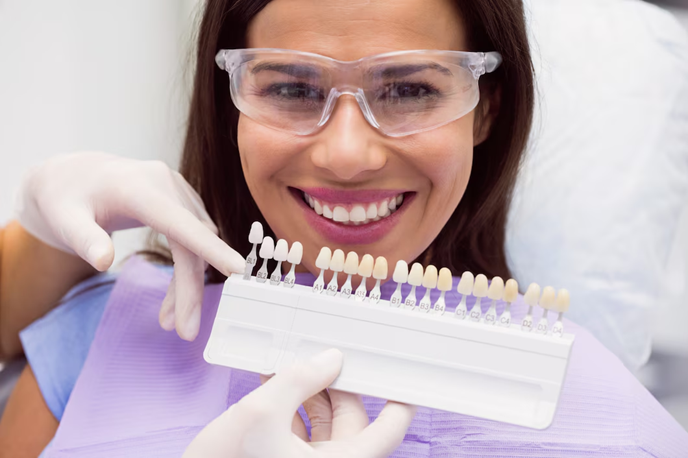
A confident smile can make a noticeable difference to your appearance, but chipped, stained, uneven, worn, or slightly misaligned teeth can sometimes make people feel self-conscious. Dental veneers are a popular cosmetic dentistry option designed to improve the visible shape, colour, size, and overall appearance of selected teeth.
If you are considering dental veneers in Chembur, you may have several questions before starting treatment. How much do veneers cost? Are porcelain or composite veneers better? Do veneers damage teeth? How long do they last? And how many veneers might you actually need?
At Dr. Alisha’s Evershine Dental & Cosmetic Clinic, patients interested in cosmetic dentistry can have their teeth, gums, bite, and smile assessed before deciding whether veneers are the right option.
This complete guide explains dental veneers cost in Chembur, different veneer types, the treatment procedure, benefits, aftercare, expected longevity, and the differences between porcelain and composite veneers.
What Are Dental Veneers?
Dental veneers are thin cosmetic restorations placed over the visible front surface of teeth.
They are designed to improve the appearance of teeth that may be:
- Discoloured
- Chipped
- Slightly cracked
- Worn down
- Uneven in shape
- Smaller than surrounding teeth
- Mildly misaligned
- Separated by small gaps
Veneers are most commonly used on front teeth because these teeth are highly visible when smiling.
Depending on your needs, your dentist may recommend porcelain veneers, composite veneers, or another cosmetic treatment.
Why Do People Choose Dental Veneers?
Patients considering cosmetic veneers in Chembur often want to improve more than one cosmetic concern at the same time.
For example, veneers may help improve:
- Tooth colour
- Tooth proportions
- Tooth shape
- Small gaps
- Minor chips
- Mild wear
- Slight asymmetry
- Overall smile appearance
One of the main benefits of dental veneers is that several aesthetic concerns can sometimes be addressed with a single treatment plan.
However, veneers are not suitable for every cosmetic or orthodontic problem. Significant crowding, severe bite problems, active gum disease, or heavily damaged teeth may require a different approach.
Dental Veneers Cost in Chembur
One of the first questions patients ask is: How much do veneers cost in Chembur?
The dental veneers cost in Chembur varies depending on several factors rather than having one fixed price.
These factors may include:
- Type of veneer
- Material used
- Number of teeth being treated
- Complexity of smile design
- Amount of tooth preparation required
- Existing tooth condition
- Laboratory charges
- Need for additional dental treatment
Because veneers are usually priced per tooth, someone needing one veneer will have a very different overall cost from someone having six, eight, or more teeth treated as part of a smile makeover.
Patients comparing tooth veneers price in Chembur should therefore ask for a complete treatment plan rather than considering only a starting price.
What Affects Dental Veneer Cost?
Several things can influence the final cost of veneer treatment.
Number of Veneers
The more teeth involved, the higher the total treatment cost.
Some patients may require only one or two veneers, while others may choose veneers across several visible front teeth.
Veneer Material
Porcelain and composite veneers use different materials and treatment processes.
Porcelain veneers generally involve laboratory fabrication, while composite veneers can often be created directly on the teeth.
Tooth Condition
If a tooth has decay, gum problems, old restorations, cracks, or other issues, these may need treatment before cosmetic veneers can be placed.
Smile Design Complexity
A simple correction for one chipped tooth is different from a complete aesthetic redesign involving several teeth.
Additional Cosmetic Treatments
Some patients may combine veneers with:
- Teeth whitening
- Gum contouring
- Orthodontic treatment
- Dental crowns
- Composite bonding
This can change the total cosmetic treatment cost.
Porcelain Veneers in Chembur
Porcelain veneers in Chembur are thin restorations that are custom-made to fit the front surfaces of selected teeth.
Porcelain is widely used in cosmetic dentistry because it can closely resemble the appearance of natural enamel.
Potential advantages can include:
- Natural-looking appearance
- Good colour stability
- Resistance to many common stains
- Ability to modify tooth shape and colour
- Customised design
Porcelain veneers generally require careful treatment planning and may involve some preparation of the tooth surface.
Composite Veneers in Chembur
Composite veneers in Chembur use tooth-coloured composite resin that is shaped directly over the tooth or prepared according to the individual treatment plan.
Composite material is also commonly used for cosmetic bonding.
Possible advantages include:
- Treatment may be completed relatively quickly
- Less tooth preparation may be required in selected cases
- Easier to repair if damaged
- Often lower initial cost than porcelain
- Suitable for smaller cosmetic corrections
However, composite material may stain or wear differently over time compared with porcelain.
Porcelain Veneers vs Composite Veneers
One of the most common questions is: Which is better, composite or porcelain veneers?
The answer depends on your cosmetic goals, tooth condition, budget, and long-term expectations.
| Factor | Porcelain Veneers | Composite Veneers |
|---|---|---|
| Appearance | Highly natural and translucent | Can provide very good cosmetic results |
| Stain resistance | Generally higher | More prone to staining over time |
| Durability | Often longer-lasting | May require earlier repair or replacement |
| Tooth preparation | May require preparation | Often more conservative in selected cases |
| Treatment time | Usually requires multiple stages | Often completed more quickly |
| Repair | May require replacement if fractured | Can often be repaired directly |
| Cost | Usually higher | Generally more affordable |
Neither material is automatically right for every patient.
A veneers dentist in Chembur should first evaluate your tooth structure and discuss the advantages and limitations of both options.
Dental Veneer Procedure Step by Step
The veneers procedure varies depending on whether porcelain or composite veneers are being used, but treatment generally follows several stages.
1. Cosmetic Consultation
Your dentist begins by discussing what you want to change about your smile.
The examination may include:
- Tooth colour
- Tooth shape
- Tooth alignment
- Gum health
- Bite
- Existing fillings
- Tooth wear
- Smile symmetry
Photographs or digital scans may also be used for treatment planning.
2. Treatment Planning
Your dentist determines:
- Which teeth should be treated
- How many veneers may be needed
- Suitable veneer material
- Desired shade
- Tooth proportions
- Whether preparation is required
This stage is important because cosmetic treatment should complement your face, smile, and surrounding teeth rather than simply making every tooth identical.
3. Tooth Preparation
For some porcelain veneers, a small amount of enamel may need to be removed from the tooth surface.
The amount of preparation varies according to the tooth position, veneer design, and existing tooth shape.
In selected cases, minimal-preparation or no-preparation approaches may be possible.
Composite veneers can often require less preparation depending on the treatment plan.
4. Impression or Digital Scan
For laboratory-made veneers, the dentist records the shape and position of the teeth using an impression or digital scan.
This information is used to create customised restorations.
5. Temporary Veneers If Required
When teeth have been prepared for porcelain veneers, temporary restorations may sometimes be placed while the final veneers are being created.
6. Veneer Placement
Once the final veneers are ready, the dentist checks:
- Shape
- Size
- Shade
- Fit
- Bite
- Overall smile appearance
The veneers are then bonded to the tooth surfaces using dental adhesive materials.
7. Final Adjustments
The bite and appearance are checked again, and minor adjustments may be made where necessary.
Are Dental Veneers Painful?
Many patients ask: Are dental veneers painful?
The procedure is generally designed to be comfortable.
If tooth preparation is required, local anaesthesia may be used depending on the extent of treatment and patient sensitivity.
Some patients may experience temporary sensitivity after veneer placement, particularly to hot or cold foods.
This usually settles, although persistent sensitivity should be reviewed by the dentist.
Do Veneers Damage Teeth?
A common concern is: Do veneers damage teeth?
Properly planned veneers are not intended to damage teeth. However, traditional porcelain veneers may require the removal of a small amount of enamel.
This means treatment can be irreversible because the prepared tooth will generally continue to require a veneer or another suitable restoration in the future.
The amount of preparation should be kept as conservative as clinically possible.
For some cosmetic problems, alternatives such as whitening, orthodontics, or composite bonding may preserve more natural tooth structure.
This is why veneers should only be recommended after discussing other suitable options.
How Long Do Veneers Last?
Patients frequently ask how long do veneers last?
There is no guaranteed lifespan because veneers are exposed to biting forces, diet, oral hygiene, tooth grinding, and other factors every day.
Porcelain veneers can often function for many years when properly planned, maintained, and cared for.
Composite veneers may need maintenance, polishing, repair, or replacement sooner because the material can gradually wear or stain.
Veneer longevity can depend on:
- Oral hygiene
- Bite
- Tooth grinding
- Nail biting
- Chewing hard objects
- Diet
- Gum health
- Material used
- Quality of bonding
- Regular dental examinations
Even well-maintained veneers are not considered lifetime restorations.
Are Porcelain Veneers Permanent?
People often ask: Are porcelain veneers permanent?
Porcelain veneers are considered a long-term cosmetic treatment, but they do not necessarily last forever.
The word “permanent” can also refer to the fact that traditional veneer preparation may remove some enamel, making the treatment irreversible.
The veneer itself may eventually require:
- Repair
- Rebonding
- Replacement
This could happen because of wear, fracture, gum changes, decay around the tooth, or other factors.
How Many Veneers Do I Need?
There is no standard number.
The answer to how many veneers do I need? depends on how many teeth are visible when you smile and what concerns you want to correct.
Examples may include:
One Veneer
A single veneer may be used when one front tooth has a visible chip, discolouration, or unusual shape.
Two to Four Veneers
A small number may be appropriate for selected cosmetic corrections.
Six to Eight Veneers
Patients seeking a broader change across the front teeth may consider treating several visible teeth.
More Extensive Smile Design
Some smile makeovers involve additional visible teeth depending on smile width.
More veneers do not automatically create a better result. The goal should be a balanced and natural-looking smile.
Veneers for Front Teeth in Chembur
Veneers for front teeth in Chembur are particularly common because front teeth play a major role in smile appearance.
Veneers may be considered for front teeth that are:
- Chipped
- Worn
- Discoloured
- Uneven
- Small
- Mildly rotated
- Separated by small spaces
Because these teeth are highly visible, careful shade and shape selection are important.
The final restoration should blend naturally with neighbouring teeth and facial proportions.
Veneers for Chipped Teeth
Small chips can change the symmetry of a smile.
Veneers for chipped teeth can recreate the missing tooth surface while improving shape and appearance.
However, a veneer is not always necessary.
Minor chips may sometimes be corrected with composite bonding, which can be more conservative.
Larger structural damage may require another restoration such as a crown.
The best treatment depends on how much healthy tooth structure remains.
Veneers for Stained Teeth
Professional whitening can improve many types of tooth staining.
However, some internal stains may not respond sufficiently to whitening.
Veneers for stained teeth may therefore be considered when:
- Discolouration is severe
- Whitening has produced limited improvement
- One tooth is much darker than surrounding teeth
- Tooth colour is combined with other cosmetic concerns
Veneers can mask the existing shade by covering the visible front surface.
Can Veneers Fix Gaps Between Teeth?
Yes, selected small spaces may sometimes be improved with veneers.
For patients asking can veneers fix gaps between teeth, the answer depends on the size and location of the gap.
Veneers can be designed slightly wider to reduce a small space while maintaining balanced tooth proportions.
However, larger spaces or multiple gaps may be better treated using orthodontics such as braces or clear aligners.
Closing a large gap with overly wide veneers can produce an unnatural result.
Veneers for Crooked Teeth
Veneers for crooked teeth can sometimes improve the appearance of mild alignment irregularities.
This is sometimes referred to as cosmetic or instant smile correction because the visible tooth shape is altered rather than physically moving the teeth.
However, veneers are not a replacement for orthodontics when teeth are significantly crowded or the bite needs correction.
Patients with substantial misalignment should usually discuss orthodontic treatment in Chembur before deciding on veneers.
Veneers vs Teeth Whitening
Whitening and veneers address different problems.
Teeth Whitening
Whitening is suitable when the main concern is tooth colour.
It does not significantly change:
- Tooth shape
- Tooth size
- Tooth position
- Chips
- Gaps
Veneers
Veneers can modify both colour and visible shape.
They may therefore be considered when a patient has several cosmetic concerns at the same time.
However, whitening is generally more conservative because it does not require covering the natural tooth with a restoration.
Veneers vs Composite Bonding
Composite bonding uses tooth-coloured resin to improve tooth shape or repair small cosmetic defects.
It may be used for:
- Small chips
- Minor gaps
- Uneven edges
- Small shape corrections
Composite veneers use the same general type of restorative material but may cover more of the visible tooth surface.
Porcelain veneers involve a laboratory-made restoration.
The right option depends on the extent of correction required.
Veneers vs Dental Crowns
A veneer primarily covers the front surface of a tooth.
A dental crown covers most or all of the visible tooth structure.
Crowns may be more appropriate for teeth that are:
- Heavily filled
- Structurally weakened
- Severely fractured
- Extensively damaged
Veneers are generally used where the tooth remains relatively healthy and cosmetic improvement is the main objective.
Benefits of Dental Veneers
The potential benefits of dental veneers include:
Improved Tooth Colour
Veneers can mask selected discolouration that may not respond adequately to whitening.
Improved Tooth Shape
They can make irregular, small, worn, or uneven teeth appear more balanced.
Repair of Cosmetic Chips
Veneers can restore the appearance of selected chipped front teeth.
Closing Small Gaps
Small spaces between teeth can sometimes be visually reduced.
More Balanced Smile
Treating several visible teeth can create more consistent proportions.
Customised Appearance
The shade and shape can be designed to complement the patient’s smile.
Possible Limitations of Veneers
Veneers also have limitations that should be considered.
These may include:
- Treatment can be irreversible
- Some enamel may need to be removed
- Veneers can chip or fracture
- They may eventually need replacement
- Porcelain is usually more expensive than direct composite treatment
- Tooth sensitivity can occur
- Veneers cannot correct every orthodontic problem
- They do not protect against gum disease or decay
Understanding both the advantages and limitations helps patients make a more informed decision.
Veneer Aftercare
Good veneer aftercare can help preserve both the restorations and underlying teeth.
Brush Normally
Brush twice daily using appropriate technique.
The teeth under veneers can still develop decay around exposed margins.
Floss Daily
Keeping the spaces between teeth and around the gum line clean is important.
Avoid Using Teeth as Tools
Do not use veneered teeth to:
- Open packaging
- Bite bottle caps
- Tear objects
- Crack hard foods
Avoid Nail Biting
Nail biting places unnecessary force on front veneers.
Manage Tooth Grinding
Patients who grind or clench their teeth may be advised to use a night guard.
Attend Regular Dental Checkups
Routine examinations allow the dentist to assess:
- Veneer margins
- Gum health
- Bite
- Signs of wear
- Underlying teeth
Can Veneers Stain?
Porcelain veneers are generally resistant to many common stains.
However, the natural teeth around them can still become darker over time.
Composite veneers are more susceptible to surface staining and may occasionally require polishing or repair.
Coffee, tea, red wine, and tobacco can contribute to staining around cosmetic restorations.
Maintaining good oral hygiene can help preserve a consistent appearance.
Can You Whiten Veneers?
Dental whitening products do not predictably change the colour of porcelain or composite restorations in the same way they lighten natural teeth.
If you are planning both whitening and veneers, your dentist may recommend whitening the natural teeth first.
The veneers can then be matched to the improved shade.
This helps reduce the risk of colour differences after treatment.
What Happens If a Veneer Chips or Falls Off?
A veneer can occasionally become damaged or debond.
If this happens:
- Do not attempt to glue it back yourself.
- Keep the veneer if it has come off intact.
- Avoid chewing on the affected tooth.
- Contact your dentist.
Composite restorations may sometimes be repaired.
A damaged porcelain veneer may need to be replaced depending on the extent of damage.
Who Is a Good Candidate for Dental Veneers?
Veneers may be considered for patients with:
- Healthy gums
- Adequate enamel
- Generally healthy teeth
- Cosmetic concerns affecting visible teeth
- Realistic expectations
- Good oral hygiene
Candidates may want treatment for:
- Staining
- Minor chips
- Small gaps
- Uneven teeth
- Minor shape problems
- Mild alignment irregularities
Who May Not Be Suitable for Veneers?
Veneers may not be recommended when there is:
- Active tooth decay
- Untreated gum disease
- Severe crowding
- Significant bite problems
- Very limited enamel
- Severe tooth grinding without management
- Major structural tooth damage
These conditions may need to be treated before cosmetic veneer treatment is considered.
Choosing a Veneers Dentist in Chembur
When searching for a veneers dentist in Chembur, treatment planning and cosmetic judgement are particularly important.
Consider a dental clinic that provides:
- Detailed cosmetic consultation
- Examination of teeth and gums
- Assessment of bite
- Discussion of porcelain and composite options
- Conservative treatment planning
- Shade selection
- Transparent pricing
- Realistic explanation of expected results
- Long-term maintenance advice
Rather than simply searching for the best veneers in Chembur, look for treatment that is appropriate for your natural teeth, facial features, and long-term dental health.
Cosmetic Dentistry in Chembur
Veneers are only one part of modern cosmetic dentistry in Chembur.
Depending on your smile concerns, alternatives or complementary treatments can include:
- Teeth whitening
- Composite bonding
- Dental crowns
- Clear aligners
- Braces
- Dental implants
- Gum contouring
- Smile makeover treatments
For example, someone with straight but stained teeth may only require whitening, while someone with significant crowding may benefit more from orthodontic treatment than veneers.
A comprehensive cosmetic assessment can help identify the most conservative treatment capable of achieving your goals.
Frequently Asked Questions
How much do veneers cost in Chembur?
The dental veneers cost in Chembur depends on the material used, number of veneers, tooth condition, complexity of smile design, and whether additional treatment is required. Porcelain veneers generally cost more than direct composite veneers because of their material and laboratory fabrication.
Which is better, composite or porcelain veneers?
Neither is automatically better. Porcelain typically offers excellent aesthetics, stain resistance, and durability, while composite can be more affordable, conservative, and easier to repair. Your dentist can recommend an option according to your teeth and goals.
Are dental veneers painful?
Veneer treatment is generally designed to be comfortable. Local anaesthesia may be used when tooth preparation is required. Some temporary sensitivity can occur after treatment.
How long do veneers last?
Veneer longevity varies according to material, oral hygiene, bite, habits, maintenance, and other factors. Porcelain veneers often provide longer-term durability, while composite veneers may need repair or replacement sooner.
Are porcelain veneers permanent?
They are considered a long-term and usually irreversible cosmetic treatment when enamel preparation is required. The porcelain restoration itself may eventually need to be repaired or replaced.
How many veneers do I need?
The number varies according to how many teeth are visible when you smile and what you want to correct. Some patients need one or two veneers, while others may treat several front teeth.
Can veneers fix gaps between teeth?
Small gaps can often be improved with carefully designed veneers. Larger spaces may be better treated using orthodontics or another approach.
Can veneers fix crooked teeth?
Veneers may improve the appearance of mild irregularities, but they do not physically straighten teeth. Significant misalignment should usually be assessed for orthodontic treatment.
Do veneers damage teeth?
Veneers are not intended to damage teeth, but traditional porcelain treatment may require removal of some enamel. This is why the treatment should be planned conservatively.
Can veneers get cavities?
The veneer itself cannot develop decay, but the natural tooth around or beneath its margins can. Good brushing, flossing, and regular dental examinations remain essential.
Can veneers be whitened?
Whitening products do not predictably change the colour of porcelain or composite veneers. Natural teeth are often whitened before veneers when a lighter overall shade is desired.
Are veneers suitable for chipped front teeth?
Yes, veneers may be suitable for certain chipped front teeth. Smaller chips may also be treatable with composite bonding.
Final Thoughts
Dental veneers in Chembur can provide an effective cosmetic option for patients who want to improve the appearance of stained, chipped, uneven, worn, or mildly misaligned front teeth.
The final dental veneers cost in Chembur depends on the type of veneer, number of teeth treated, complexity of treatment, tooth condition, and whether additional cosmetic or restorative procedures are required.
Porcelain veneers can offer highly aesthetic and stain-resistant results, while composite veneers may provide a more affordable and conservative solution for suitable cases. Neither treatment should be chosen solely on price.
The best approach is to first determine whether veneers are actually the most appropriate way to achieve your desired smile.
If you are considering cosmetic veneers in Chembur, you can visit Dr. Alisha’s Evershine Dental & Cosmetic Clinic for a personalised cosmetic dental assessment and to discuss porcelain veneers, composite veneers, whitening, bonding, and other smile improvement options.