
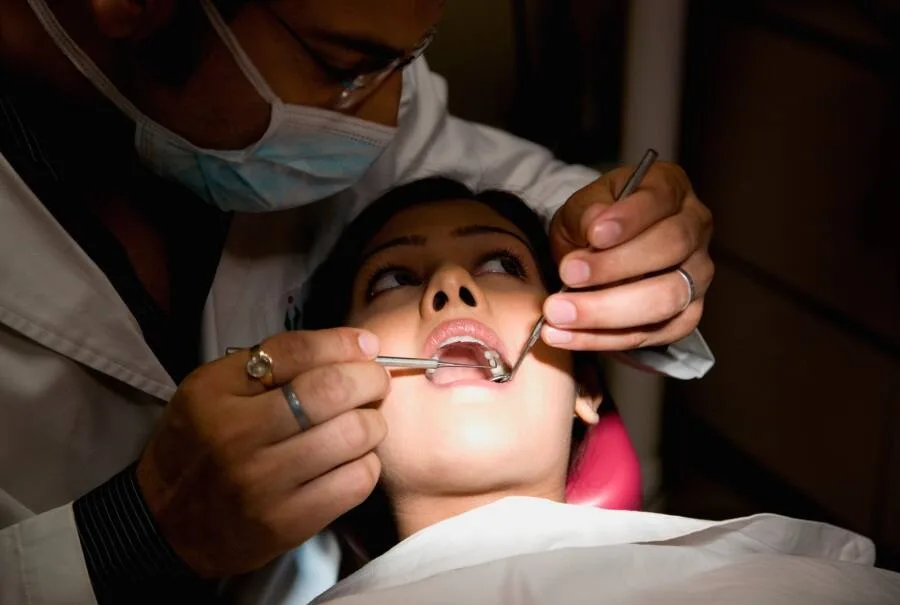
A mouth ulcer can make eating, drinking, brushing, and even speaking uncomfortable. Most individual ulcers heal within a week or two, but some people experience recurring mouth ulcers that disappear and then return repeatedly. If your mouth ulcers keep coming back, the cause may involve minor injury, stress, certain foods, nutritional deficiencies, dental irritation, or recurrent aphthous ulcers. Most mouth ulcers are harmless, but an ulcer that persists for more than three weeks should be professionally assessed.
Patients experiencing frequent mouth ulcers, painful sores, or an ulcer that is not healing can visit Dr. Alisha’s Evershine Dental and Cosmetic Clinic in Chembur for an in-person examination. You can also explore the Dentist in Chembur page or use an online dental consultation for initial guidance.
If you are asking why do I keep getting mouth ulcers?, this guide explains the common causes and triggers, ulcers on different parts of the mouth, treatment options, healing time, nutritional factors, and the warning signs that mean an ulcer should be checked by a dentist or doctor.
What Are Mouth Ulcers?
Mouth ulcers are small areas where the surface lining inside the mouth becomes damaged, creating a painful sore.
They may develop on:
- Inside of the lips
- Inside of the cheeks
- Tongue
- Gums
- Floor of the mouth
- Other soft tissues inside the mouth
Many common ulcers have a round or oval appearance with a pale centre and a red border.
The NHS notes that most ordinary mouth ulcers clear within approximately one to two weeks.
When similar ulcers repeatedly disappear and return, they may be described as recurrent mouth sores or recurrent aphthous ulcers.
Why Do I Keep Getting Mouth Ulcers?
There is not always one identifiable reason for recurring mouth ulcers.
Common possible triggers include:
- Minor mouth injury
- Accidental cheek or lip biting
- Sharp teeth
- Braces
- Stress
- Certain foods
- Nutritional deficiencies
- Irritating toothpaste or oral products
- Recurrent aphthous stomatitis
- Certain underlying medical conditions
Mayo Clinic lists minor oral injury, food sensitivities, and diets low in nutrients such as vitamin B12, zinc, folate, or iron among possible triggers associated with canker sores.
Understanding when and where the ulcers occur can sometimes help identify a repeated trigger.
1. Recurrent Aphthous Ulcers
One of the most common causes of recurrent canker sores is recurrent aphthous ulceration.
These are painful ulcers that repeatedly develop inside the mouth without being caused by the herpes virus.
They may occur:
- One at a time
- In small groups
- Several times per year
- More frequently in some people
NHS hospital guidance notes that recurrent aphthous ulcers commonly heal in around 7–14 days or roughly two weeks, often without scarring.
2. Stress and Mouth Ulcers
Many patients ask: Can stress cause recurring mouth ulcers?
Stress is considered a possible trigger in some people who are prone to aphthous ulcers. NHS guidance on recurrent oral ulceration also lists stress among factors associated with recurrence.
You may notice stress mouth ulcers appearing during:
- Work pressure
- Exams
- Poor sleep
- Emotional stress
- Periods of significant fatigue
Stress does not necessarily directly create every ulcer, but it may contribute in susceptible individuals.
If you notice a repeated connection between stressful periods and outbreaks, managing sleep and stress may help alongside dental evaluation.
3. Mouth Injury
A small mouth injury can sometimes develop into an ulcer.
Common causes include:
- Accidentally biting your cheek
- Biting your lip
- Hard or sharp foods
- Toothbrush trauma
- Dental treatment
- Sports injuries
Mayo Clinic identifies accidental cheek bites, dental work, sports injuries, and overly vigorous brushing as possible triggers for canker sores.
An ulcer caused by a one-time injury usually improves after the area is no longer being irritated.
4. Sharp Tooth Causing a Mouth Ulcer
A sharp tooth mouth ulcer can occur when a broken tooth, rough filling, or sharp tooth edge repeatedly rubs against the same area.
This may explain why an ulcer:
- Keeps occurring in exactly the same place
- Improves and then returns
- Feels worse while talking or chewing
If the cause is mechanical irritation, treating the sharp tooth or restoration may allow the tissue to heal.
A persistent ulcer that repeatedly occurs in the same area should still be professionally checked.
Why Do Mouth Ulcers Keep Appearing in the Same Place?
When an ulcer repeatedly develops in exactly the same location, possible explanations include:
- Sharp tooth edge
- Broken filling
- Cheek biting
- Denture irritation
- Braces
- Repeated local trauma
Do not simply assume repeated trauma is the cause if the same ulcer does not completely heal.
An ulcer that lasts more than three weeks should be assessed by a dentist or doctor.
5. Braces and Mouth Sores
Braces mouth sores can develop when brackets or wires rub against the lips or cheeks.
New braces can be particularly irritating while the tissues are still adjusting.
Possible ways to reduce irritation may include:
- Orthodontic wax
- Keeping the mouth clean
- Having protruding wires adjusted
- Avoiding foods that repeatedly traumatise the area
If a wire is continuously cutting the tissue, contact your orthodontic provider rather than allowing the injury to continue.
6. Vitamin and Nutritional Deficiencies
Patients frequently ask: What vitamin deficiency causes mouth ulcers?
Nutritional deficiencies do not explain every case, but recurrent ulcers have been associated with low intake or deficiency of certain nutrients, including:
- Vitamin B12
- Folate
- Iron
- Zinc
Mayo Clinic includes low intake of vitamin B12, zinc, folate, or iron among potential factors associated with canker sores.
However, you should not automatically start taking multiple supplements simply because you develop ulcers.
If a nutritional deficiency is suspected, your doctor may recommend appropriate testing first.
Vitamin B12 and Mouth Ulcers
Vitamin B12 is involved in normal cell and blood function.
Low vitamin B12 levels can sometimes be considered when patients have frequent mouth ulcers, especially when other symptoms or dietary risk factors are present.
A healthcare professional can determine whether blood testing is appropriate.
Iron Deficiency and Mouth Ulcers
Iron deficiency may also be investigated in selected patients with recurrent oral ulceration.
Other symptoms may include:
- Tiredness
- Weakness
- Pale skin
However, mouth ulcers alone cannot diagnose iron deficiency.
Blood tests are needed before deciding whether iron supplementation is appropriate.
7. Certain Foods
Some patients notice ulcers after eating particular foods.
Potential triggers reported in association with canker sores include:
- Spicy foods
- Acidic foods
- Citrus
- Certain nuts
- Chocolate
- Coffee
- Some cheeses
Mayo Clinic lists food sensitivities, including reactions to certain foods, among potential triggers for canker sores.
If you repeatedly notice ulcers after the same food, keeping a short food-and-symptom diary may help identify a pattern.
8. Toothpaste and Oral-Care Products
Some people experience irritation associated with ingredients in certain toothpaste or mouth rinses.
Mayo Clinic specifically lists oral-care products containing sodium lauryl sulfate among possible canker-sore triggers.
If recurrent ulcers seem related to a particular product, discuss alternatives with your dentist rather than stopping oral hygiene altogether.
9. Hormonal Changes
Some individuals notice changes in mouth-ulcer frequency during hormonal fluctuations.
The pattern can vary considerably between people.
If recurrent ulcers appear consistently during particular periods, mention this pattern when speaking with your dentist or doctor.
10. Underlying Health Conditions
Most mouth ulcers are minor and do not indicate a serious illness.
However, recurrent or unusually severe ulcers can sometimes occur alongside underlying health conditions.
Examples can include inflammatory or immune-related disorders.
Behçet disease, for example, can cause recurrent painful mouth ulcers along with other symptoms affecting different parts of the body.
This does not mean frequent mouth ulcers automatically indicate an immune disease.
Additional symptoms and medical assessment are needed before such conditions are considered.
Mouth Ulcers on the Tongue
Mouth ulcers on tongue can be particularly painful because the tongue moves continuously during:
- Speaking
- Eating
- Swallowing
Possible causes include:
- Accidental biting
- Sharp tooth edges
- Aphthous ulcers
- Food irritation
- Trauma
An ulcer on the tongue that does not heal within three weeks should be examined.
Mouth Ulcers on the Gums
Mouth ulcers on gums may result from:
- Trauma
- Dental appliances
- Local irritation
- Certain inflammatory conditions
Not every sore on the gum is actually an aphthous ulcer.
Dental infections and gum abscesses can sometimes look like small bumps or sores, so an examination may be necessary if there is swelling, pus, toothache, or persistent pain.
Mouth Ulcers Inside the Lip
Mouth ulcers inside lip are common because the lips can easily be:
- Accidentally bitten
- Irritated by braces
- Rubbed against sharp teeth
If the ulcer heals normally within approximately one to two weeks, it is usually less concerning.
Repeated ulcers in exactly the same position should be checked for local irritation.
Multiple Mouth Ulcers at Once
Some people develop multiple mouth ulcers during one episode.
This can occur with recurrent aphthous ulceration.
If ulcers are:
- Very numerous
- Unusually large
- Extremely painful
- Spreading
- Accompanied by other symptoms
professional evaluation is appropriate.
Recent NHS hospital guidance recommends assessment when ulcers are unusually large, persistent, spreading, or accompanied by systemic symptoms.
What Is the Normal Mouth Ulcer Healing Time?
Typical mouth ulcer healing time for an uncomplicated ulcer is around one to two weeks.
During healing, the ulcer should generally:
- Become less painful
- Gradually become smaller
- Eventually disappear
Healing time may be longer if the ulcer continues to be irritated by a sharp tooth, braces, or repeated biting.
How Long Should a Mouth Ulcer Last?
Most simple ulcers should resolve within approximately one or two weeks.
The important threshold is around three weeks.
The NHS recommends seeing a GP or dentist if a mouth ulcer lasts longer than three weeks.
A persistent mouth ulcer should therefore not be repeatedly treated at home without assessment.
Mouth Sore Treatment
Mouth sore treatment depends on the cause and severity.
For uncomplicated aphthous ulcers, treatment is generally aimed at:
- Reducing pain
- Protecting the ulcer
- Allowing healing
- Avoiding triggers
NIDCR notes that over-the-counter gels can be used to numb canker-sore pain and that avoiding spicy or abrasive foods may reduce irritation.
Some patients with recurrent or severe ulcers may be prescribed medicated mouth rinses or topical steroid preparations after professional evaluation. NHS hospital guidance notes that certain mouthwashes and topical steroid treatments can sometimes reduce symptoms and speed resolution.
What Can You Do at Home?
While a simple ulcer is healing, you can try to reduce irritation.
Avoid Very Spicy Foods
Spicy foods may make the ulcer sting more.
Avoid Sharp or Crunchy Foods
Hard foods can repeatedly traumatise the sore.
Choose Softer Foods
Soft foods may be more comfortable while the ulcer is painful.
Maintain Oral Hygiene
Continue brushing carefully.
Allowing plaque to accumulate is unlikely to help healing.
Avoid Repeatedly Touching the Ulcer
Do not scrape or poke the sore.
Stay Hydrated
Adequate hydration can help keep the mouth comfortable.
Should You Put Salt Directly on a Mouth Ulcer?
Applying salt directly to an ulcer can be very painful and may irritate the tissue.
Some people use a gentle salt-water rinse, but it should not replace professional evaluation for persistent or recurrent ulcers.
Can Mouth Ulcers Be Prevented?
Not every recurrence can be prevented.
However, you may reduce triggers by:
- Using a gentle toothbrush
- Treating sharp teeth or broken fillings
- Using orthodontic wax if braces irritate your cheeks
- Avoiding foods that repeatedly trigger symptoms
- Maintaining good oral hygiene
- Managing identified nutritional deficiencies
- Reducing repeated mouth trauma
If ulcers are frequent, keeping a record of:
- Foods eaten
- Stress levels
- Menstrual or hormonal patterns
- Location of ulcers
- Duration
may help identify recurring triggers.
Are Mouth Ulcers Contagious?
Typical aphthous or canker sores are not the same as cold sores.
Canker sores develop inside the mouth and are not caused by the herpes virus. NIDCR distinguishes canker sores from fever blisters/cold sores, which are caused by herpes simplex virus.
This distinction matters because sores around the lips may have a different cause from typical recurrent aphthous ulcers inside the mouth.
When Should a Mouth Ulcer Be Checked by a Dentist?
Arrange an examination when:
- An ulcer lasts longer than three weeks
- It repeatedly occurs in exactly the same place
- It becomes unusually large
- Several severe ulcers appear together
- Pain prevents normal eating or drinking
- You notice a lump
- There is unexplained bleeding
- The ulcer looks different from previous ulcers
- You have additional unexplained symptoms
The NHS specifically recommends professional assessment for a mouth ulcer lasting more than three weeks.
Mouth Ulcers and Oral Cancer Warning Signs
It is important to discuss this carefully.
Most mouth ulcers are not oral cancer.
However, a persistent mouth ulcer that does not heal can be one of the symptoms that needs further evaluation.
Potential oral cancer warning signs can include:
- An ulcer lasting more than three weeks
- Persistent red or white patches
- An unexplained lump
- Persistent mouth pain
- Difficulty swallowing
- Unexplained changes inside the mouth
The NHS advises seeking evaluation for an ulcer lasting longer than three weeks and also lists persistent ulcers among symptoms that should be checked for possible mouth cancer.
The purpose of getting checked is not to assume the worst—it is to rule out persistent conditions that require treatment.
Why Is an Ulcer in the Same Place Important?
A sore repeatedly occurring in the same area may simply be caused by repeated trauma.
For example:
- Sharp tooth
- Broken filling
- Denture edge
- Braces wire
But if the area does not heal properly between episodes, an examination is important.
A dentist can check for local mechanical causes and determine whether further investigation is needed.
Can Stress Cause Recurring Mouth Ulcers?
Yes, stress is recognised as a possible trigger in people prone to recurrent aphthous ulcers.
However, if ulcers are frequent, severe, or persistent, do not automatically assume stress is the only cause.
Other factors may need to be investigated.
What Vitamin Deficiency Causes Mouth Ulcers?
Deficiencies or low intake of nutrients such as:
- Vitamin B12
- Folate
- Iron
- Zinc
have been associated with recurrent canker sores in some patients.
A clinician may recommend blood tests if your medical history or symptoms suggest deficiency.
Supplements should ideally be based on a confirmed need rather than taken blindly.
Can Mouth Ulcers Come From a Sharp Tooth?
Yes.
Repeated friction from a sharp or fractured tooth can injure the cheek, lip, or tongue.
If you have a sharp tooth mouth ulcer, correcting the dental irritation may allow the sore to heal and prevent it from returning.
Can Braces Cause Frequent Mouth Ulcers?
Brackets and wires can irritate the lips and cheeks, especially soon after braces are fitted or adjusted.
Orthodontic wax may protect the area temporarily.
If a wire is protruding or repeatedly injuring the tissue, have it adjusted.
Do Mouth Ulcers Need Antibiotics?
Most ordinary aphthous ulcers do not require antibiotics.
Antibiotics are used for specific bacterial infections rather than routine canker sores.
Treatment should therefore depend on the diagnosis rather than automatically using antibiotics for every painful mouth lesion.
Can an Online Dental Consultation Help With Mouth Ulcers?
An online consultation can be useful as an initial step for recurring mouth ulcers, particularly if you can clearly photograph the area.
You can discuss:
- How frequently ulcers appear
- How long they last
- Exact location
- Whether they occur in the same place
- Possible sharp teeth
- Braces
- Pain severity
- Other symptoms
Patients can use Evershine’s online dental consultation for initial guidance.
However, a persistent mouth ulcer, unusual lesion, or repeatedly recurring sore may require direct examination.
Frequently Asked Questions
Why do I keep getting mouth ulcers?
Common causes and triggers include recurrent aphthous ulcers, stress, mouth injury, sharp teeth, braces, certain foods, and nutritional deficiencies. Sometimes no single cause is identified.
Can stress cause recurring mouth ulcers?
Yes. Stress is recognised as a possible trigger for recurrent aphthous ulcers in susceptible people.
What vitamin deficiency causes mouth ulcers?
Low intake or deficiency of vitamin B12, folate, iron, and zinc may be associated with recurrent ulcers in some patients.
How long should a mouth ulcer last?
Most uncomplicated mouth ulcers heal within around one to two weeks. An ulcer lasting more than three weeks should be checked.
When should a mouth ulcer be checked by a dentist?
See a dentist or doctor if the ulcer lasts more than three weeks, is unusually large, keeps returning in the same place, is extremely painful, or is associated with other concerning symptoms.
Why do mouth ulcers keep appearing in the same place?
Repeated irritation from a sharp tooth, broken filling, cheek biting, braces, or another local factor may be responsible. Persistent recurrence in one area should be examined.
Are recurring mouth ulcers serious?
Most recurrent aphthous ulcers are not serious, but frequent, unusually severe, or persistent ulcers may require investigation for an underlying cause.
Are mouth ulcers contagious?
Typical aphthous ulcers or canker sores are not the same as herpes-related cold sores.
Can a sharp tooth cause a mouth ulcer?
Yes. Repeated rubbing against a sharp or broken tooth can produce traumatic ulcers.
Can braces cause mouth sores?
Yes. Brackets and wires can irritate the cheek and lip tissues, especially during the early stages of orthodontic treatment.
Should I worry about a mouth ulcer that does not hurt?
Pain level alone does not determine whether an ulcer needs assessment. Any unexplained ulcer persisting beyond three weeks should be checked.
Can recurring ulcers be treated permanently?
Treatment can reduce pain and sometimes shorten episodes, but recurrent aphthous ulcers may continue to recur. NHS hospital guidance notes that treatments can reduce symptoms and speed healing without necessarily preventing future episodes.
Final Thoughts
Recurring mouth ulcers can be frustrating and painful, particularly when they affect eating, speaking, or brushing. Common mouth ulcer causes include recurrent aphthous ulcers, stress, minor trauma, sharp teeth, braces, certain foods, and nutritional deficiencies.
Most ordinary ulcers heal within approximately one to two weeks. However, if your mouth ulcers keep coming back, repeatedly appear in the same location, become unusually large or painful, or do not heal within three weeks, it is worth getting them professionally assessed.
If you are experiencing frequent mouth ulcers or have a persistent sore that concerns you, you can visit Dr. Alisha’s Evershine Dental and Cosmetic Clinic in Chembur, explore the Dentist in Chembur page, or use an online dental consultation for initial guidance.
This article is intended for general educational purposes and does not replace an individual dental or medical examination, diagnosis, or personalised treatment plan.